
Blog Posts, Worktops
What is The Best Material For Bathroom Worktops?
Sep
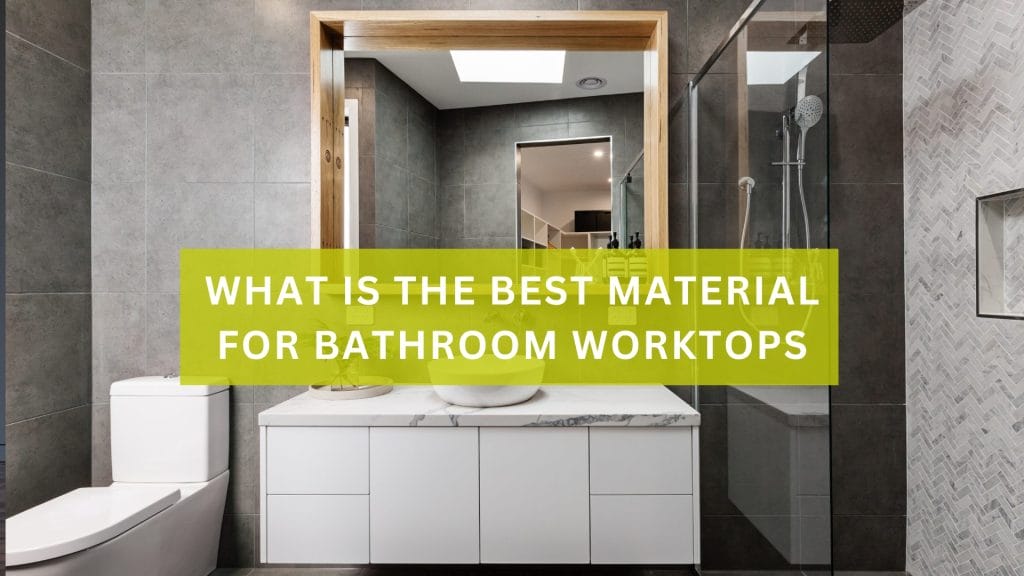
If you’re struggling to make a choice and understand what is the best material for bathroom worktops, allow us to help you with this guide.
Choosing the perfect worktop for your bathroom can be overwhelming and confusing, considering so many material choices.
One wrong choice can lead to constant maintenance, costly repair, and an appearance that doesn’t match what you had planned.
As you read ahead, we’ll take a look at what each of these materials offers, their pros, cons, and eventually help you bring your dream design to life.
Best Material For Bathroom Worktops
Material | Average Cost in UK | Durability | Stain Resistant | Water Resistant | Scratch Resistant |
Marble | £180 per square foot* | Moderate | Moderate | Moderate | Poor |
Granite | £40 to £180 per square foot* | High | Moderate | Good | Good |
Quartz | £50 and £100 per square foot* | High | Excellent | Excellent | Excellent |
Sintered stone | £500 to £600 per square metre | Very High | Excellent | Excellent | Excellent |
Quartzite | £37 to £55 per square foot | Very High | Good | Good | Excellent |
Ceramic / Porcelain | £55-£120 per square foot | High | Excellent | Excellent | Excellent |
Laminate materials | £6–£15 per square foot | Low | Moderate | Moderate | Poor |
Note that the prices for Sintered stones are calculated as “per square metre.”
*Important: the prices mentioned above are average prices. It’s important to remember that pricing for each material will vary based on multiple factors. To get the exact quote, make sure to consult a specialist.
Marble
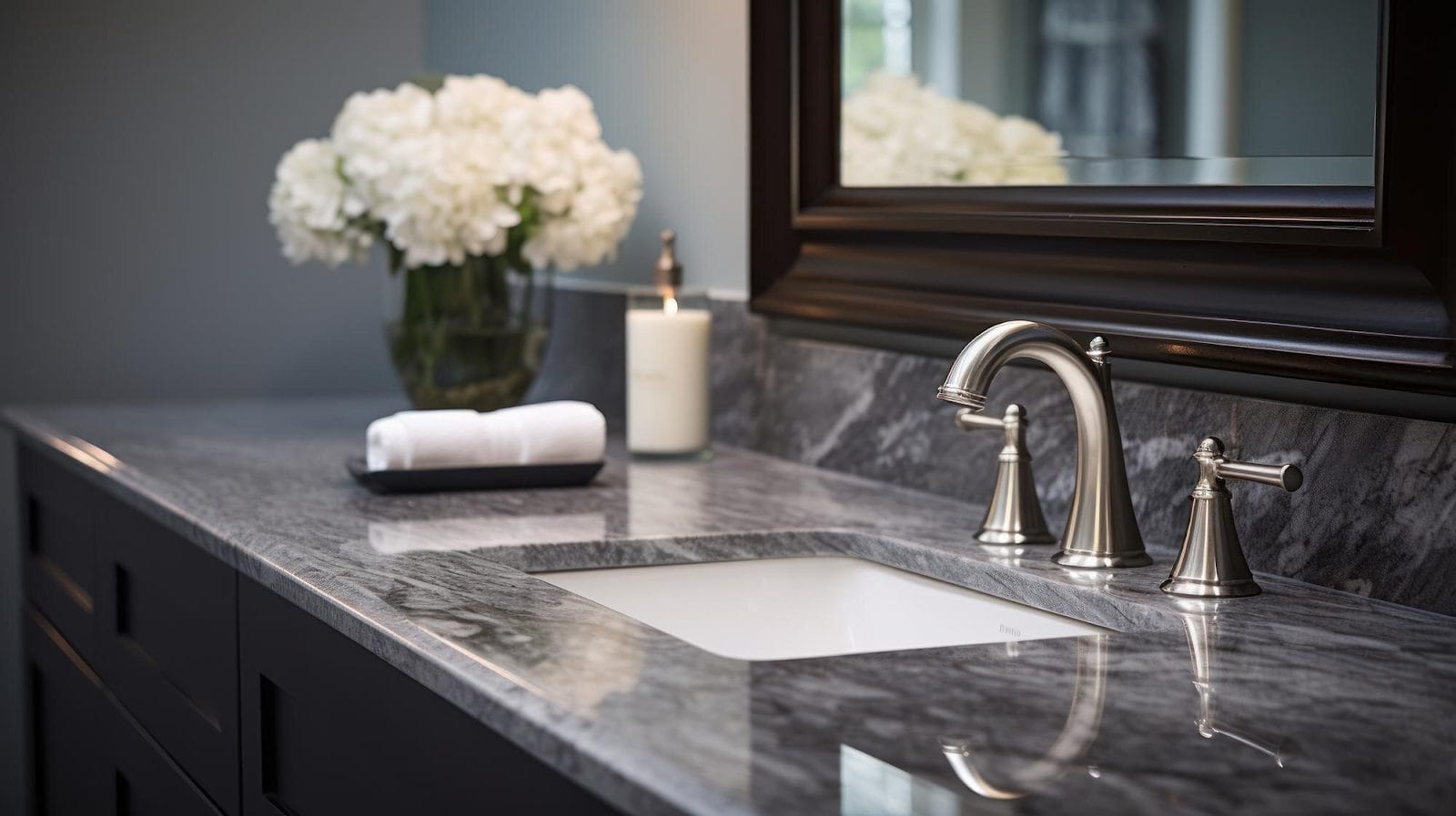
Best For: Marble remains a classic bathroom worktop look and is best for elegant and low-traffic bathrooms.
Known for their timeless beauty, Marble worktops will never go out of trend and remain one of the most popular choices for bathroom worktops. What makes this material stand out from others is its natural beauty, which makes each pattern distinctive and cannot be replicated entirely. Marble basins and vanities are a popular choice as scratches are not as common as in kitchens.
However, it’s also worth noting that marble requires sealing to maintain and protect them from sealing. And, regular sealing and mild cleaning techniques are necessary.
Ultimately, marbles make it perfect for a luxurious and sophisticated look.
Pros
- Comes in a wide range of colours and patterns
- Looks aesthetics with their amazing designs
- Marble countertops are timeless beauty
- Heat resistant
Cons
- Prone to scratches and stains
- Requires regular sealing
Granite
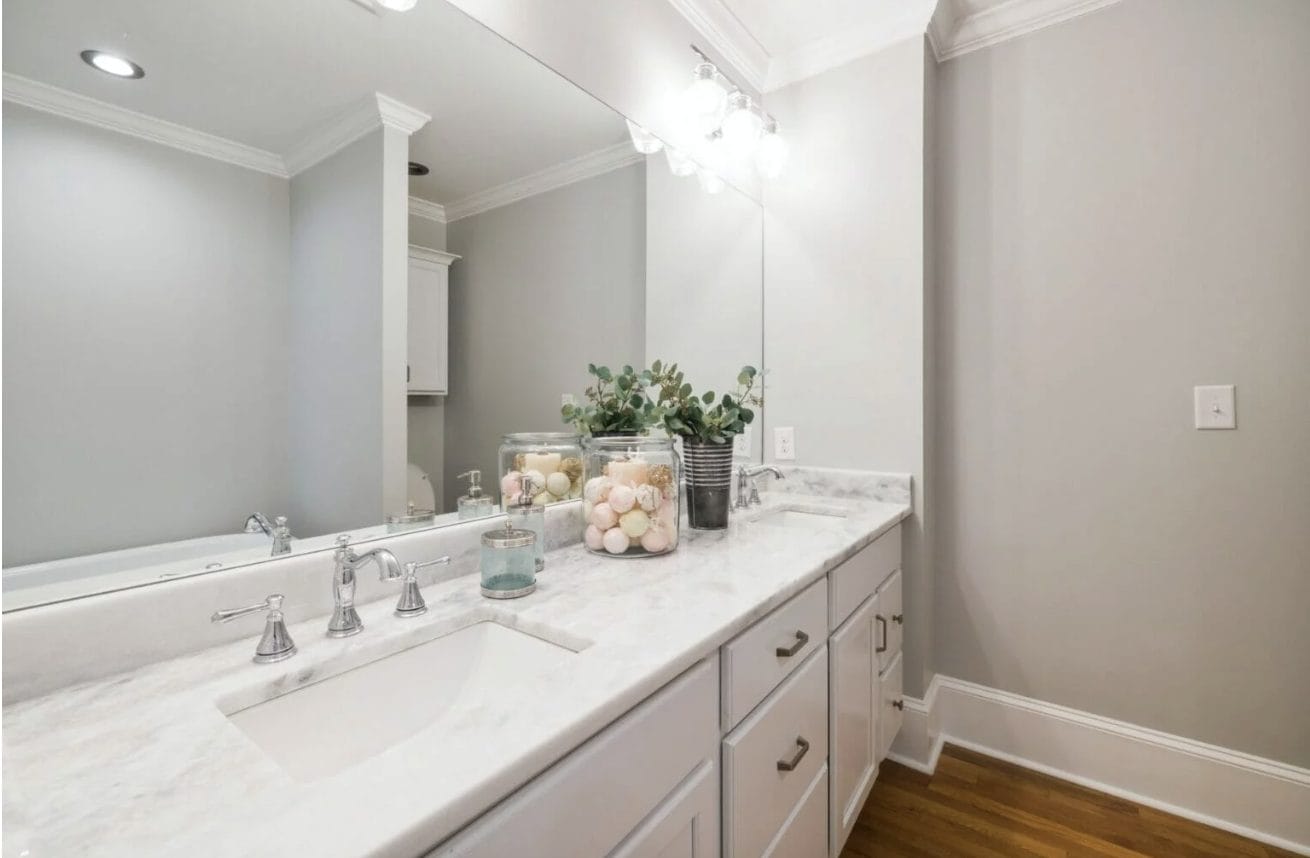
Best For: Granites are natural stones with unique patterns and are best for high-end and busy bathrooms.
Granite is a natural stone that comes with different patterns, similar to marble. However, compared to marble materials, granite worktops are affordable options.
Designed perfectly for indoor and outdoor bathrooms, Granite provides a perfect fusion of style and functionality.
Moreover, it is highly heat- and scratch-resistant, making it perfect for busy bathrooms. It cleans up easily with a little soap and water and only needs to be sealed occasionally.
Pros
- Durable with natural beauty
- High resistance to scratch and heat
- Stain and heat-resistant
Cons
- Needs sealing
- Can be expensive
Quartz
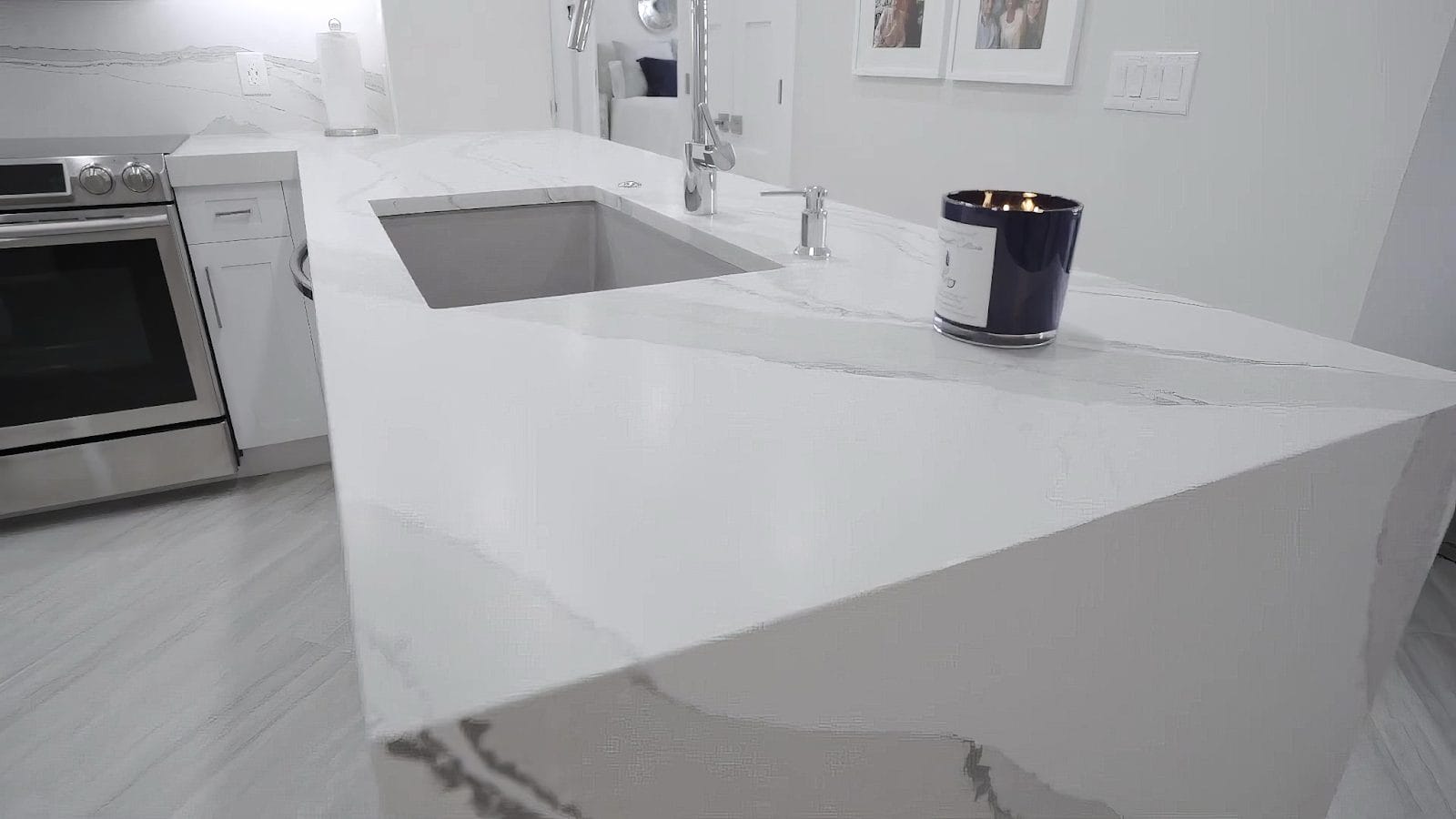
Best For: Quartz worktops are an excellent choice for high-end bathrooms and for people who prefer durability with natural beauty.
Quartz can be called the greatest range of options out of any stone available because of the various designs and colours to choose from.
Practicality and uniformity are two areas where quartz shines as an engineered stone. In fact, Quartz is becoming a more and more popular option for bathroom countertops because of its durability and low maintenance requirements.
They are very easy to clean, are extremely resistant to stains and scratches, and don’t need to be sealed.
Pros
- Quartz is low-maintenance
- Extremely strong and durable
- Comes with unique patterns
- Wide range of designs and colours
Cons
- Maybe expensive
- They’re not heat-resistant
Sintered Stone
Best For: Sintered stones are excellent for indoor and outdoor bathrooms, considering their ability to resist heat, damage, UV rays, and scratches.
Sintered stones are commonly named the “next generation in engineered stone” because they are created using innovative methods. Due to this, sintered stones are highly durable.
Besides, since they’re non-porous, it is exceptionally resistant to stains, UV radiation, scratches, and heat. They are also excellent if you’re looking for low-maintenance and easy-to-clean bathroom worktop material. Lastly, if you’re looking for a durable and modern look, sintered stones might be the best option for you!
Pros
- Easy and low maintenance
- Highly durable
- Comes with beautiful designs
Cons
- Sintered stones can be difficult to repair
- Comparatively expensive
Quartzite
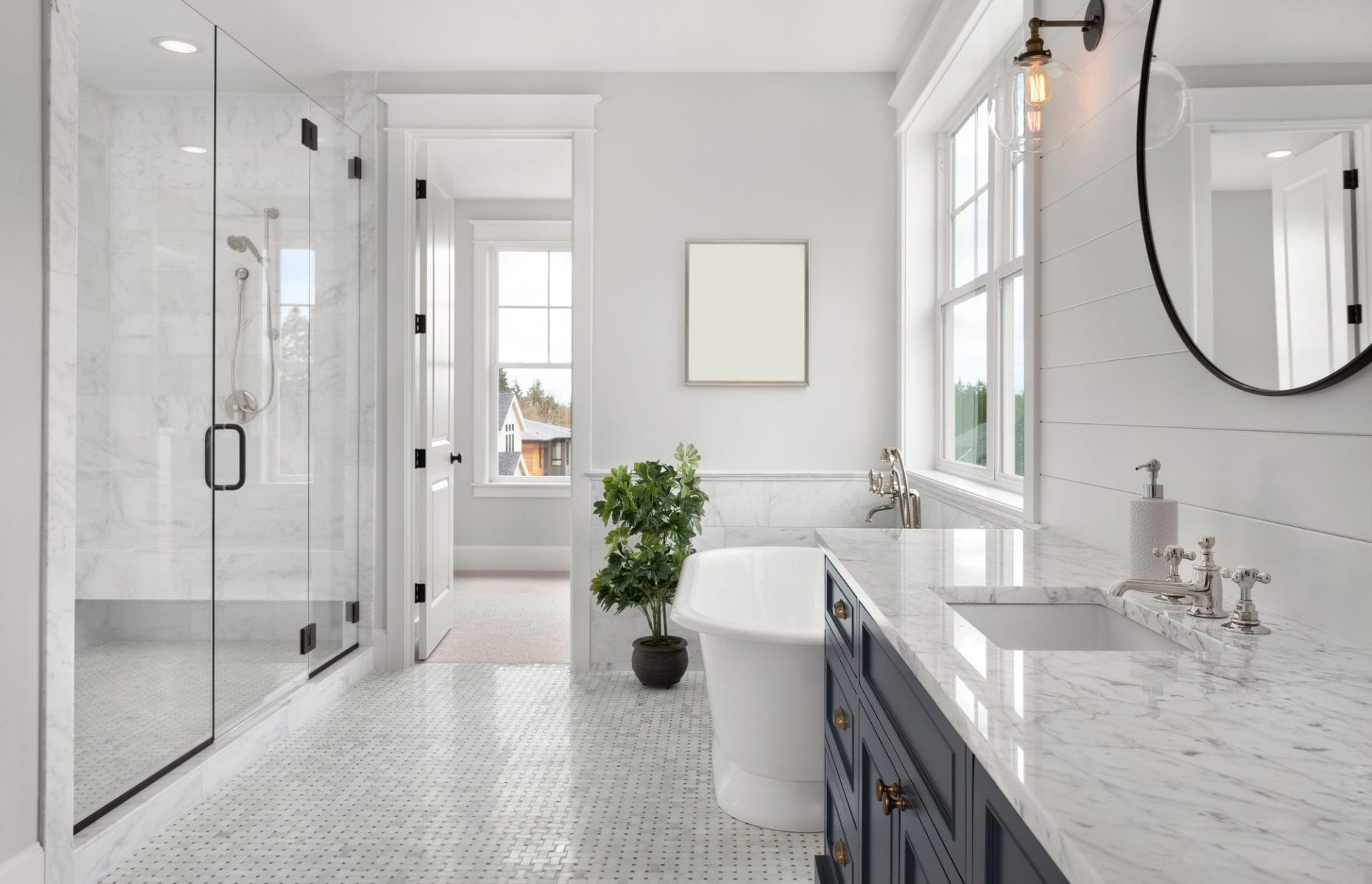
Best For: Due to its high durability, Quartzite is best for people who are looking to combine elegant looks with better performance than marble.
Natural stone, quartzite, is often mistaken for quartz. They’re 100% natural and come with some of the unique designs and patterns for a great bathroom look.
This material offers the best of both worlds, combining the appearance of marble with the durability of granite. Quartzite is an ideal choice for high-traffic bathrooms due to its high resistance to scratches, heat, and etching.
While quartzite requires sealing and careful washing with the right chemicals, its outstanding hardness and strength make it an excellent choice for people seeking both beauty and toughness.
Pros
- Highly durable than marbles
- Unique and aesthetic appearance
- Heat resistant
Cons
- Requires sealing often
- Can be expensive
Ceramic / Porcelain
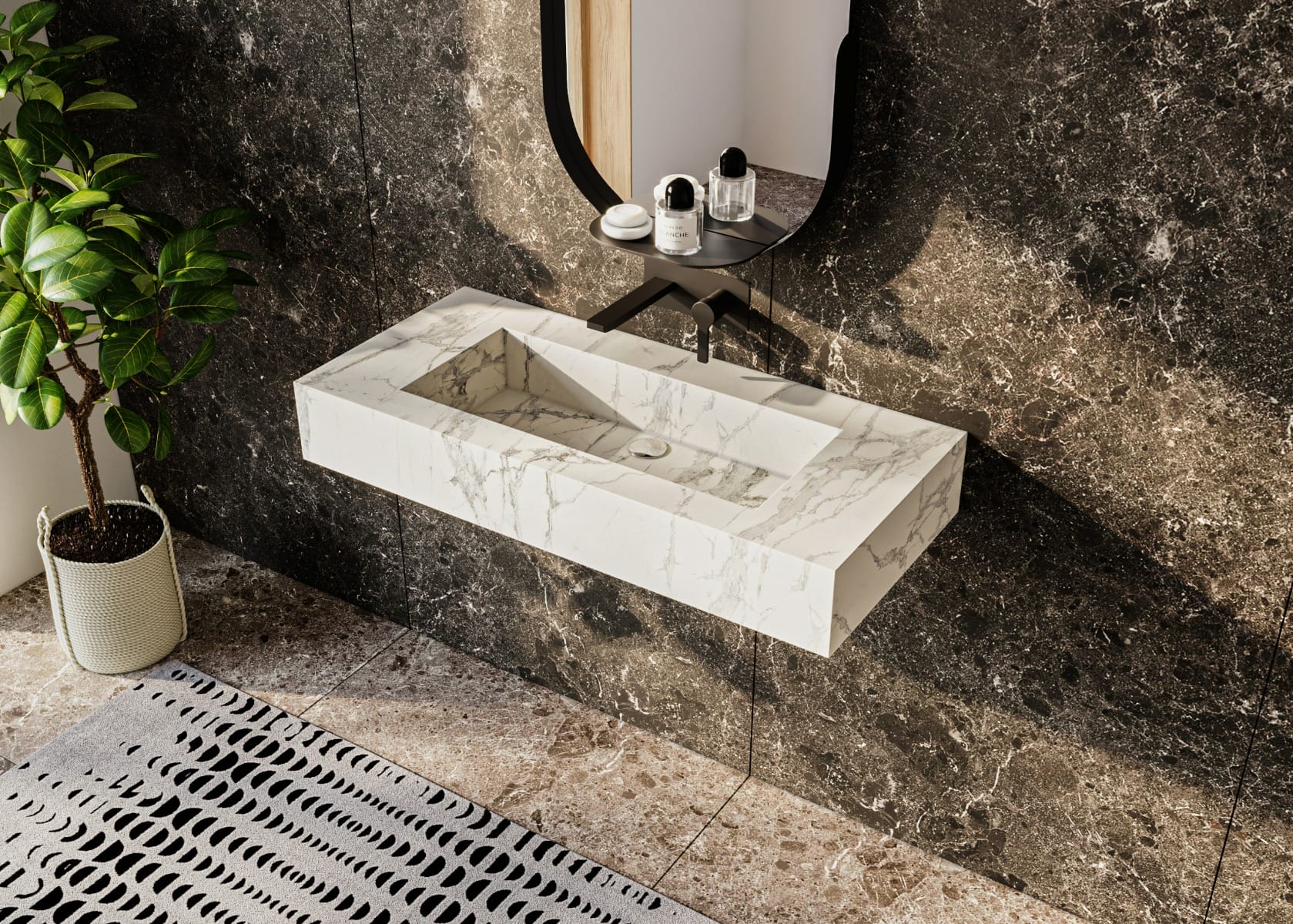
Best For: They’re best for wet areas, and due to their water-resistant nature, ceramic or porcelain worktops are one of the best options for bathrooms.
Ceramic and porcelain tiles are diverse solutions with good water resistance. Their durability and design possibilities make them appropriate for a variety of bathroom styles, from conventional to modern.
These materials are low-maintenance since they do not require sealing and are easy to clean.
Additionally, ceramic / porcelain are fairly simple to clean and maintain, while grout lines may require more attention. They also come in a wide range of colours, patterns, and textures, giving you plenty of options to pick your design.
Pros
- Low maintenance and easy-to-clean
- Water-resistant
- Affordable choice
Cons
- Visible grout lines
- Can crack or chip
Laminate Bathroom Worktops
Best For: Laminate worktops are excellent picks for people who are looking for an economical bathroom upgrade. However, they might not be durable if you’re looking for long-term results.
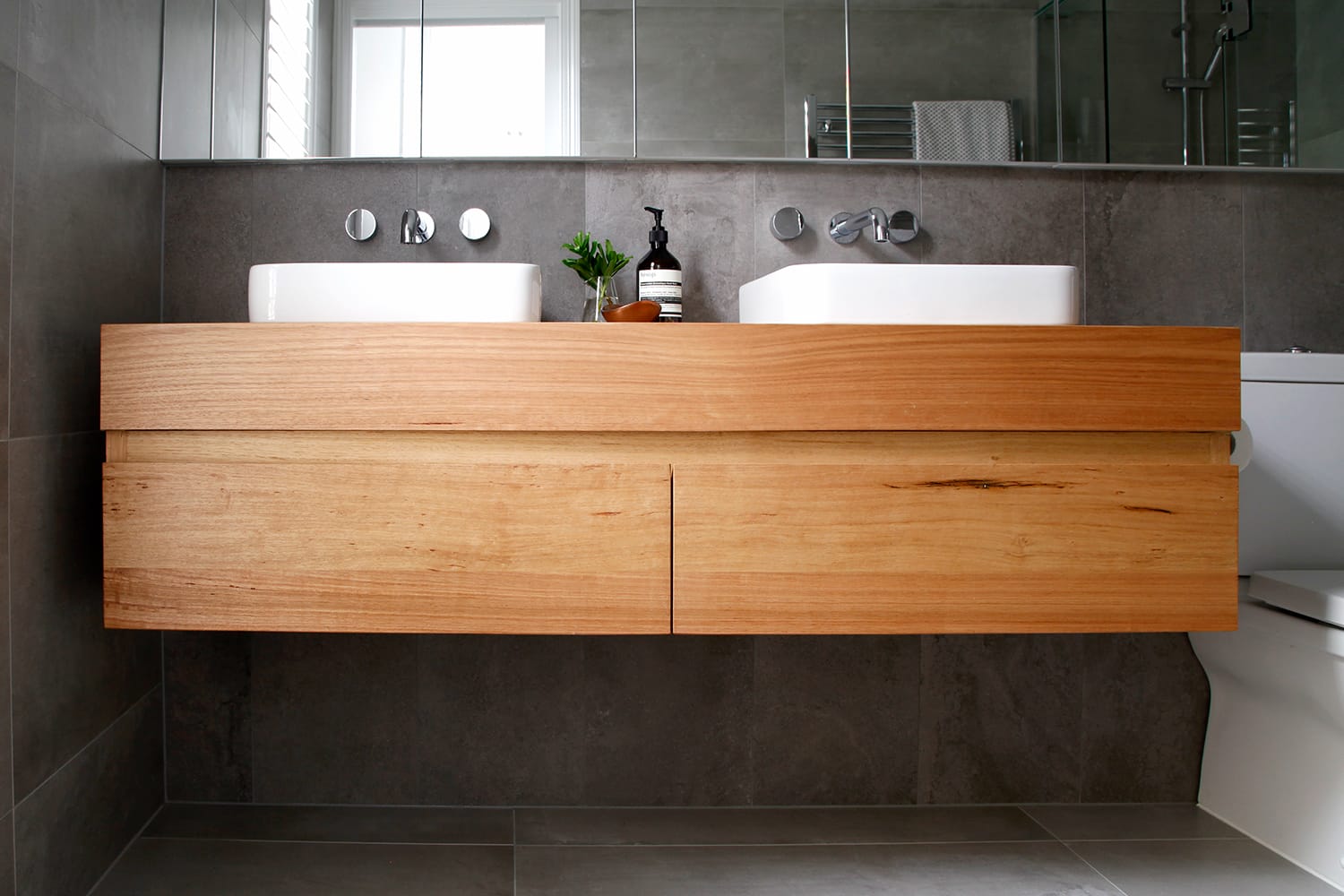
While not as durable as stone, laminates excel at delivering a diverse variety of design options at a reasonable price.
Laminate materials also provide an affordable choice for bathroom countertops without losing beauty. Their most notable characteristic is their ability to effectively replicate the appearance of actual stone or wood at a fraction of the expense.
However, it’s worth mentioning that laminates may not be as resistant to high temperatures or sharp things as other materials.
Furthermore, you need to consider short- and long-term costs. This is primarily because laminates come at a lower price than natural stones, but they also pose a risk of water damage that can add to the cost of constant repair and replacement.
Therefore, make sure you consider all the factors, pros, and cons before picking laminate. Ultimately, we don’t want you to spend extra money later just to save some right now.
Pros
- Easy to install
- Easy to maintain
- Highly affordable
Cons
- Lower perceived value
- Less durable than other materials
- Can warp from moisture
Things to Consider When Choosing The Right Bathroom Worktop
- Set up a budget
Before you begin your search, you should establish a clear budget. This budget should account for not just the cost of the material but also installation costs. Consider the long-term expenses of maintenance and replacements, too.
- Are they easy to maintain?
Bathroom worktops shouldn’t be consuming your time to maintain them. Easy-to-clean and maintain materials can help you save time and effort.
- Are they durable?
Four important considerations to check durability are:
- Water resistance
- Scratch resistance
- Impact
- Stain resistance
Consider the amount of usage of your bathroom as well as how long you want your worktop to last. Although more resilient materials may cost more upfront, they frequently result in longer-term cost savings.
Low-maintenance solutions may be a better fit for busy households because they provide convenience without compromising quality. Certain materials need to be sealed on a regular basis or cleaned with specialised treatments to keep their functioning and appearance.
- Installation Methods
Depending on the material you pick, the installation method will vary. Some can be installed yourself, while others need professional help. You might want to consider all the factors, even during the budgeting.
- Design and overall appearance
Picking a design for your bathroom worktop can be time-consuming and confusing, too. Consider factors like colour, pattern, and texture. Think about whether you would rather have a more contemporary or natural look. Furthermore, choose from the options that are in line with your vision when choosing a worktop because it may have a big impact on the overall feel of your bathroom.
Conclusion
Remember that the right choice strikes a balance between long-term value, functionality, and beauty.
Need help in selecting the right worktop material for your bathroom? Allow our team to assist you! At Paramount Stone Specialists, we stay committed to helping you right from selecting the right material to helping to easily maintain them post-installation.
Get a free quote or call us directly at 01482 585600.
